TUYOHW Tall Planters for Indoor and Outdoor Use
Six models, one consistent idea: a 24-inch planter that gives roots real depth, handles actual weather, and doesn't look like an afterthought on your porch or patio. Whether you're growing a dwarf tree, training a topiary, or just want a clean tapered pot by your front door, this line covers the range from classic square to modern round, plastic to metal.

All Six Models at a Glance
Square Ribbed Tall Planter Set (Brown)
See on Amazon
Round Self-Watering Tall Planter (Black)
See on Amazon
Square Ribbed Tall Planter Set (Black)
See on Amazon
Classic Square Tall Planter Set (Black)
See on Amazon
Metal Rectangular Tall Planter (Brown)
See on Amazon
Striped Self-Watering Round Planter Set
See on AmazonSide-by-Side Specs
All dimensions are per planter. Models sold as sets of 2 are noted — the specs below describe a single unit from each set.
| Model | Dimensions (W×D×H) | Material | Drainage | Best for |
|---|---|---|---|---|
| Square Ribbed Brown (B0FMY1VQPB) — set of 2 | 11 × 11 × 24 in | Plastic — UV, frost, fade resistant | Drainage hole + tray included | Entryways, porches, warm-toned outdoor settings |
| Round Ribbed Black (B0GZ3DQYKM) — set of 2 | 12.6 × 12.6 × 24 in | Plastic — ribbed finish | Self-watering reservoir | Modern patios, indoor rooms, moisture-loving plants |
| Square Ribbed Black (B0DKFMP65X) — set of 2 | 11 × 11 × 24 in | Plastic — UV, frost resistant; ~8.9 lb each | Drainage hole + tray included | Front doors, deck corners, flanking steps |
| Square Classic Black (B0DKFN7JP1) — set of 2 | Trapezoidal/square tapered, 24 in tall | Plastic | Drainage hole + tray included | Clean, solid-color look without ribbed texture |
| Rectangular Metal Box (B0FNRD8DNC) | 32 × 10 × 16.3 in | All-weather metal | Drainage holes + removable shelf | Railing edges, fence lines, porch steps, trees |
| Self-Watering Round Black (B0G63PFRTL) — set of 2 | 12.6 × 12.6 × 23.6 in | Plastic — ribbed finish; ~6.4 lb each | Self-watering reservoir | Herbs, indoor plants, anyone who waters inconsistently |
If you're placing these by a front door or on a porch and want a matched pair that looks intentional, start with the square ribbed models — the tapered silhouette reads as purposeful rather than generic. If your main concern is keeping plants alive through inconsistent watering, either self-watering round model solves that problem in a way the standard drainage models don't.
What to Think About Before You Pick One
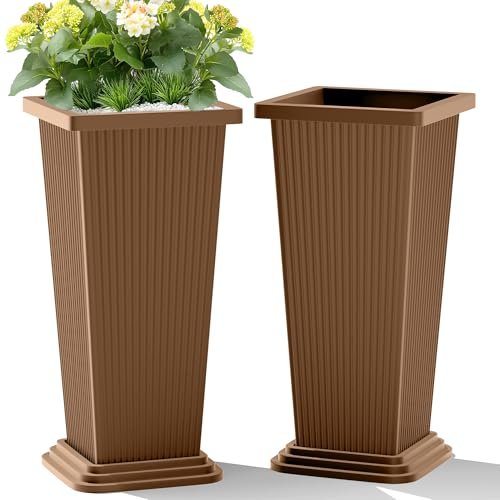
The most important split in this line is plastic versus metal. Five of the six models are plastic — high-density, UV-resistant, and frost-resistant. The sixth is a rectangular metal planter box (32 × 10 × 16.3 inches) with a removable shelf inside. Metal handles freeze-thaw cycles well and gives you a more architectural look, but plastic is lighter to move and easier to clean. If you're putting these on a third-floor balcony or moving them inside for winter, the plastic sets — most under 18 pounds per pair — are easier to deal with.
Shape is the next real decision. The square tapered models (11 × 11 × 24 inches) have a smaller footprint and tuck neatly into corners, beside entryways, or flanking a door. The round models (12.6-inch diameter, 24 inches tall) read as more contemporary — they suit a modern patio or a bright indoor room better than a traditional garden setting. The rectangular metal box (32 inches wide) works differently than the rest: it's designed to line a railing edge, run along a fence, or sit on a porch step rather than stand as a focal-point pot.
Drainage setup matters depending on where these will live. Every plastic model includes a drainage tray — that tray is what makes indoor or porch use practical on hardwood floors or deck boards. The drainage hole lets water out; the tray catches it. If you're placing these directly on bare soil or a gravel garden bed, the tray is optional. If you're putting them on a sealed porch floor, the tray is not optional. The metal planter box has drainage holes but no tray — plan accordingly for surface protection.
- Corner or entryway placement: square tapered models, 11-inch base fits tight spots
- Modern patio or indoor room: round ribbed models, 12.6-inch diameter, cleaner silhouette
- Railing edge or fence line: rectangular metal box, 32 inches wide with removable shelf
- Moving indoors for winter: plastic sets, lighter weight, included tray protects floors
- Permanent outdoor installation: metal planter box, all-weather construction
What 24 Inches of Depth Actually Gets You
Most standard nursery pots run 10 to 14 inches deep. A 24-inch tall planter — even accounting for drainage layer and soil settling — gives you roughly 18 to 20 inches of usable root depth. That's enough for dwarf citrus, compact ornamental grasses, small Japanese maples, dahlias, and most herbs that otherwise get root-bound and stop producing. It's also deep enough for tomatoes if you go with a compact variety like Patio or Tumbling Tom and water consistently.
The self-watering round models (B0GZ3DQYKM and B0G63PFRTL) add a reservoir at the base that wicks water upward as the soil dries. That feature changes the calculus for plants that need consistent moisture — herbs, ferns, peace lilies — and makes these models a better fit for anyone who travels occasionally or forgets to water. The standard models (square tapered in black and brown, rectangular metal) are conventional drainage-down designs, which gives you more control over soil moisture if you're growing plants that prefer dry periods between waterings, like succulents, lavender, or olive trees.
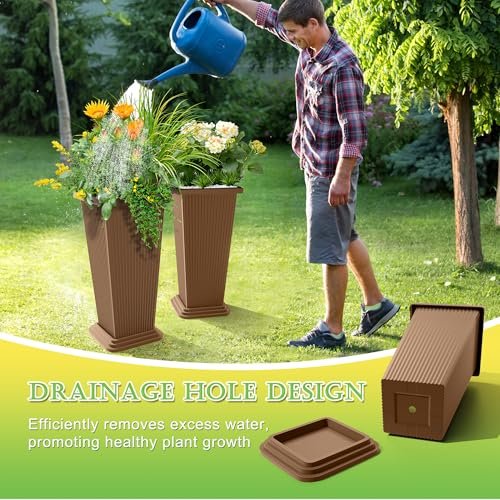
For outdoor use specifically, the UV-resistant and frost-resistant ratings on the plastic models mean the finish holds through a full growing season without fading or chalking, and the walls don't crack or become brittle through a Midwest winter. That's a meaningful upgrade from the cheap injection-molded pots that start cracking at the rim after one freeze-thaw cycle. The ribbed texture on both the square and round models also adds structural rigidity — the ribs aren't just decorative, they prevent the walls from bowing outward under soil pressure when the pots are fully loaded.
Keeping These Planters in Good Shape Season to Season
For the plastic models, maintenance is genuinely low. Wipe the exterior with a damp cloth at the end of the season to remove mineral deposits and soil staining — the ribbed finish hides surface marks well, but buildup in the grooves will eventually dull the color. The UV-resistant coating holds the black or brown finish through sun exposure, but "UV resistant" means slowed fading, not zero fading. Keep that in mind if one planter will live in full sun and another in shade — they may not match perfectly after three or four seasons.
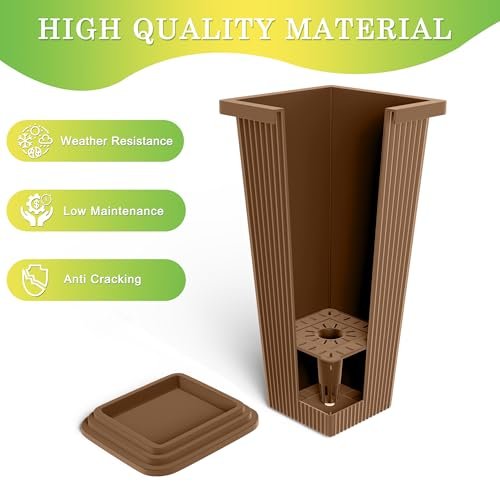
One thing worth doing at the start of each season: check the drainage hole and tray. Roots from fast-growing plants can grow into or clog the drainage hole from below. If you notice waterlogged soil despite watering less, pull the plant out and clear the hole before the root system seals it off. Trays should be emptied after heavy rain — standing water in a drainage tray for more than a day or two is where root rot actually starts, not in the pot itself.
For the metal rectangular planter box, an occasional rinse and wipe-down is enough for general upkeep. The all-weather construction handles rain and humidity without rust treatment, but if you're in a coastal climate with salt air, a light coat of paste wax on the exterior once a year will extend the finish. The removable shelf inside is useful for drainage structure — place a layer of gravel or a mesh liner on it before adding soil to prevent the drainage holes from silting over. Don't leave standing water in the base; even durable metal planters benefit from proper drainage management.
- Wipe plastic exteriors down at season end — pay attention to ribbed grooves
- Clear drainage holes every spring before refilling with fresh soil
- Empty drainage trays within 24 hours of heavy rain to prevent root rot
- For the metal box in coastal climates, apply paste wax once a year to maintain the finish
- Use the removable shelf in the metal box as a drainage platform, not just a display surface
Frequently Asked Questions
Do the drainage trays actually catch water well enough to use these on hardwood floors?
The tray is included with every plastic model that offers it, and it's designed to sit under the drainage hole and catch runoff. For hardwood or finished floors, the tray does the job under normal watering — meaning you water slowly enough that the soil absorbs most of it before it reaches the hole. If you drench the pot all at once, any tray will overflow. The safer move for hardwood is to water until you see just a small amount in the tray, then stop. Empty the tray within 24 hours. The metal rectangular planter box does not include a tray, so use a waterproof liner or saucer under it if it's going indoors.
What's the difference between the self-watering models and the standard drainage ones?
The two round ribbed models (B0GZ3DQYKM and B0G63PFRTL) have a built-in water reservoir at the base. The plant wicks water upward through the soil as it needs it, which keeps moisture more consistent than hand-watering allows. The standard square models drain conventionally — water goes in the top, excess exits through the hole at the bottom. Self-watering suits moisture-loving plants like herbs, ferns, and tropical foliage. Standard drainage suits plants that need to dry out between waterings — succulents, lavender, olive trees, and most Mediterranean herbs.
Can these handle a full Midwest or Northeast winter left outside?
The plastic models are rated frost-resistant, which means the material itself won't crack from cold. The risk in freeze-thaw climates isn't the pot — it's soil expansion. Wet soil freezes and expands, and that pressure can crack any container if the soil is waterlogged when temperatures drop. The practical fix: stop watering in late fall and let the soil dry down before the first hard freeze. If you're growing tender perennials or tropicals, bring those plants in regardless of pot material. The metal rectangular box handles freeze-thaw well; if anything, drain the base completely before winter to prevent standing water from expanding inside the structure.
How stable are these in wind — will a 24-inch tall plastic pot blow over?
A fully planted and watered pot is significantly heavier than an empty one, which helps stability. The square tapered models have a wider base than top, which is the right geometry for wind resistance. That said, a large plant with significant top growth — like a tall ornamental grass or a climbing rose — will increase the wind-catch area and raise the center of gravity. In a consistently windy spot (exposed rooftop, open balcony), fill the bottom few inches with gravel before adding soil to lower the center of gravity, and consider pushing the pots against a wall or railing rather than placing them in the open. The rectangular metal box at 32 inches wide and lower profile (16.3 inches tall) is inherently more stable than any of the tall plastic models.
What size plants actually work at 24 inches deep versus a standard nursery pot?
At roughly 18 to 20 inches of usable soil depth after accounting for drainage layer and settling, these planters can support dwarf citrus, compact ornamental trees (Japanese maple in a dwarf variety, columnar evergreens), dahlias, most herbs, and compact vegetable varieties. Standard nursery pots at 10 to 14 inches depth will root-bind most of those plants within one to two seasons. The round models at 12.6 inches in diameter give you a bit more horizontal root spread than the square models at 11 inches — a small difference, but worth noting if you're growing something like a dwarf fig that spreads roots sideways as much as down.
Is the ribbed texture purely decorative, or does it do something structural?
Both. The ribbed pattern gives the surface a cleaner look than a plain plastic wall — it catches light differently and hides minor scuffs and surface marks better than a smooth finish. But the ribs also add structural rigidity to the walls. A plain flat plastic wall of the same thickness will bow outward under the weight and pressure of fully saturated soil; ribbing distributes that pressure more evenly and keeps the walls from deforming. It's the same reason corrugated materials are stiffer than flat sheets of the same weight. On a practical level, it means a fully loaded pot keeps its tapered profile rather than bulging at the sides after a season of use.